Home
Ms In Embedded Systems Germany
Back to Resources
Germany

Is an MS in Embedded Systems in Germany Worth It?

Pratik Jain8 min read
Is an MS in Embedded Systems in Germany Worth It?

Last Updated: May 29, 2026

Pursuing a Master of Science (MS) in Embedded Systems in Germany in 2026 is one of the most high-ROI decisions an engineering graduate can make. With public university tuition ranging from €0 to €3,000/year (approx. ₹0 to ₹3.29 lakhs/year at 109.80 INR/EUR as of July 26, 2026), an annual living budget of €11,904 (approx. ₹11 lakhs INR) required in a blocked account, and starting salaries between €45,000 and €60,000 (approx. ₹49.41L to ₹65.88L at 109.80 INR/EUR as of July 26, 2026) (rising to €73,000+ (approx. ₹80.15L+ at 109.80 INR/EUR as of July 26, 2026)), Germany represents the gold standard for hardware and automotive engineering. Indian graduates also benefit from an 18-month post-study work visa to secure a career in Europe's strongest industrial powerhouse.

QUICK ANSWER: MS in Embedded Systems Germany 2026

  • Tuition Cost: €0 at public universities (semester contribution €150, €350)
  • Living Funds Required: €11,904 per year (approx. ₹13.07 lakhs calculated as of 26th July 2026 at an exchange rate of 109.80 INR/EUR) in a blocked account
  • Starting Salary Range: €45,000 to €60,000 per year (approx. ₹49.41L to ₹65.88L INR at 109.80 INR/EUR as of July 26, 2026)
  • Job Market Partners: Bosch, Siemens, BMW, Audi, Infineon
  • Post-Study Work Visa: 18 months job-seeker rights to secure a position
to -

Why Study MS in Embedded Systems in Germany?

Germany is home to several of the world’s top universities, known for their strong focus on research and applied sciences. The country’s industrial base (Bosch, Siemens, Audi) ensures that graduates are highly sought after.

Key Advantages:

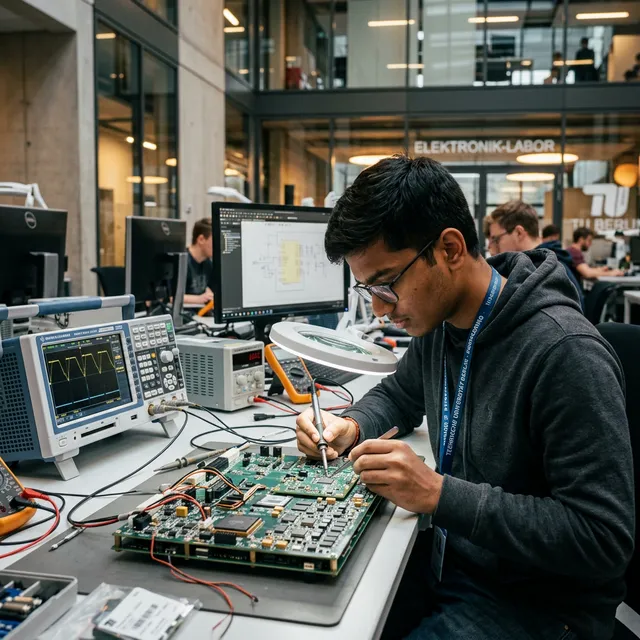
  • High-Quality Education: Access to advanced labs at universities like TU Munich and RWTH Aachen.
  • Industry Connections: Emphasis on practical learning with internships in automotive and electronics sectors.
  • Career Prospects: Embedded Systems engineers can expect starting salaries from ₹40L to ₹55L per annum, rising to €73,000+ (approx. ₹80.15L+ at 109.80 INR/EUR as of July 26, 2026) with experience.
  • High Living Standards: Efficient transport, safety, and a growing Indian community in cities like Munich and Berlin.

to -

Need a High Score Fast?

Don't risk your admission on a low English score. Join our intensive coaching batches with proven 8.0+ band results.

View Coaching Options

Want an honest read on your study-abroad plan?

Book a free 30-minute session with Pratik. Know your profile score, program fit, and 90-day roadmap.

1,500+ students guided by Pratik since 2012
Full refund if a jointly-agreed 3+ university shortlist gets zero offers
Direct access to Pratik — same strategist from day one to your visa, no juniors

What are the Pros and Cons of Studying Embedded Systems in Germany?

To make an informed decision, you must evaluate the entire landscape rather than just the positive aspects:

The Pros (Advantages)

  • Extreme Cost-Efficiency: You receive a top-tier education for less than 15% of what a similar master's degree would cost in the United States or the United Kingdom.
  • Global Hardware Hub: Germany is the silicon valley of Europe. Companies like Infineon, Bosch, NXP, and Continental have their primary research centers here.
  • Robust Post-Study Work Rights: The 18-month job-seeker visa is highly flexible and allows you to work part-time anywhere while searching for a full-time engineering role.

The Cons (Challenges)

  • Unforgiving Academic Rigor: Passing exams at German TUs requires intense self-discipline. Grade inflation does not exist; many students take 5-6 semesters to complete a 4-semester course.
  • The Language Barrier: While your coursework is in English, finding internships and full-time roles requires conversational German (B1/B2 level is highly recommended by employers).
  • Mandatory Bureaucracy: The process of obtaining an APS Certificate and securing visa appointments can take up to 4-5 months of upfront preparation.

to -

What are the Top German Universities for MS in Embedded Systems?

(As on May 2026 - verified against DAAD and official university portals)

| Sl No | University & Course Name | Location | Duration of the Course | Tuition Fee (Annual Approx) | Admission Requirements | | : to - | : to - | : to - | : to - | : to - | : to - | | 1 | University of Freiburg - MS in Embedded Systems Engineering | Freiburg | 24 Months | €0 (semester fee €310) | IELTS / TOEFL, 2 LORs, SOP, CV, Transcripts | | 2 | Saarland University - MS in Embedded Systems | Saarbrücken | 24 Months | €0 (semester fee €290) | IELTS / TOEFL, 2 LORs, SOP, CV, Transcripts, Math/Informatics background | | 3 | University of Kaiserslautern - Masters in Embedded Computing Systems (ESY) | Landau | 24 Months | €0 (semester fee €330) | IELTS / TOEFL, GRE, 2 LORs, SOP, CV, Transcripts, Degree Certificate | | 4 | Chemnitz University of Technology - MSc in Embedded Systems | Chemnitz | 24 Months | €0 (semester fee €280) | IELTS / TOEFL, German A1, 2 LORs, SOP, CV, Transcripts | | 5 | European Masters on Embedded Intelligence Nanosystems Engineering - MSc Program | Germany / Greece / France | 24 Months | €0 (State-subsidized) | IELTS / TOEFL, 2 LORs, SOP, CV, Transcripts, Internship or Work experience | | 6 | University of Ravensburg, Weingarten - MS in Electrical Engineering & Embedded Systems | Weingarten | 18 Months | €3,000 / year (non-EU fee) | IELTS / TOEFL, GRE, 2 LORs, SOP, CV, Transcripts, APS Certificate, Work Exp | | 7 | Bremerhaven University of Applied Sciences - MS in Embedded Systems Design | Bremerhaven | 18 Months | €0 (semester fee €310) | IELTS / TOEFL, 2 LORs, SOP, CV, German A1, Transcripts, Work Exp | | 8 | TU Hamburg - MSc in Microelectronics & Micro Systems | Hamburg | 24 Months | €0 (semester fee €340) | IELTS / TOEFL, 2 LORs, SOP, CV, Transcripts, APS Certificate | | 9 | University of Bremen - MSc in Control, Micro Systems & Microelectronics | Bremen | 24 Months | €0 (semester fee €320) | IELTS / TOEFL, 2 LORs, SOP, CV, Transcripts, Passport |

to -

What is the Realistic Cost Breakdown for Studying in Germany?

Although tuition at public universities is essentially free, you must budget accurately for other mandatory costs. Below is a realistic financial breakdown for an Indian student over a 24-month program:

  • German Blocked Account (Mandatory living proof): €11,904 (approx. ₹11,00,000 INR)
  • Semester Contribution Fees: €300 per semester (x 4 semesters = €1,200 / approx. ₹1,31,760 INR at 109.80 INR/EUR as of July 26, 2026)
  • German APS Credential Verification Fee: ₹18,000 INR
  • IELTS Exam Fee: ₹19,000 INR
  • Airfare and Initial Setup buffer: approx. ₹1,00,000 INR
  • Total Estimated Upfront Investment: ₹13,50,000 INR (The blocked account represents €11,904 of this, which is returned to you month-by-month at €992/month once you land).

to -

What Common Mistakes Should Indian Students Avoid?

  • Relying solely on English for job search: While a university degree can be completed in English, 90% of embedded systems engineering jobs require reading hardware datasheets or collaborating with production lines in German. Learn the language early.
  • Opening the Blocked Account late: Many students wait until receiving an admission offer (which can arrive as late as July) before initiating their blocked account.
    • The Risk: Open slots for VFS appointments fill up instantly in summer. Without a fully funded blocked account confirmation, you cannot attend your visa interview. Open your account as soon as you have applied to universities.
  • diluting your profile with generic applications: German universities use strict, credit-matching algorithms rather than holistic evaluations. If you are missing 5 credits in Higher Mathematics or Digital Logic, your application is automatically rejected. Carefully verify your credit requirements before applying.

to -

Admission & Application Guide

Applying to German universities requires meticulous preparation. Here's a consolidated guide on what you need and how to process your application.

Eligibility & Documents

  • Academic Profile: Relevant Bachelor’s degree with strong CGPA.
  • English Proficiency: IELTS/TOEFL is mandatory.
  • Core Documents: High School Certificates, Transcripts, GRE (if required), CV, SOP, and LORs.

The APS Certificate

The APS certificate is a mandatory validation of your Indian academia. It acts as a bridge between the Indian system and German authorities.

  • Prerequisite: Mandatory for visa and university applications.
  • Validation: Confirms the authenticity of your documents.

Application Steps

  • Deadlines: March for Winter semester, September for Summer.
  • Uni-Assist: Central point for many universities (requires original digitally signed APS).
  • Certification: Notary or University certification (with English/German stamps).

to -

📄

Free Guide: SOP Skeleton & 10 Critical Errors

Download our free 1-page PDF SOP framework used by 600+ students admitted to top global universities.

What Scholarship & Financial Aid is available?

Scholarships for Students from Bangalore/Karnataka

There are several scholarships available, including the DAAD Scholarship, which is highly competitive but offers full funding. But there are some other scholarships available as well, particularly for students from Karnataka. Some common scholarship opportunities include:

  • Karnataka State Government Scholarships: These scholarships are often geared towards merit-based students, minority students, and economically weaker sections.
  • National Overseas Scholarship (NOS): A central government initiative that provides financial support to students from India who wish to pursue a master’s degree abroad.

Check this website for eligibility criteria and application details: Karnataka Scholarships on Buddy4Study.

In addition, many Australian universities offer their own merit-based and need-based scholarships for international students.

State Government and Private Scholarships from Karnataka

Students from Karnataka may also be eligible for various private and state-government-backed scholarships aimed at encouraging higher education abroad. For example:

  • Karnataka Government’s Vidyasiri Scheme: Offers financial aid to students from minority backgrounds.
  • Private Trust Scholarships: Many private foundations, such as the Narotam Sekhsaria Foundation, offer funding for postgraduate studies abroad.

Financial Aid Options Specific to Bangalore/Karnataka Students

If scholarships aren’t enough, don’t worry! There are other financial aid options available:

Educational Loans: Several banks and financial institutions offer education loans with competitive interest rates.

Government-Backed Loans: Explore government-backed loan schemes that provide financial support for higher education.

to -

What is it like Living in Germany?

Germany offers a fantastic student experience, but there are adjustments to consider. Here’s a glimpse:

  • Cost of Living and Accommodation Options: The cost of living in Germany varies by city. Here’s a breakdown of some living expenses in Germany:
    • Accommodation: €350-€550 per month (₹32,000-₹50,000)
    • Local Travel: €49 per month (using the Deutschlandticket for unlimited regional transport)
    • Food: €200-€300 per month (₹18,000-₹27,000)
    • Electricity, Internet, and Books & Stationery: €100-€150 per month
  • Connecting with the Kannada Community in Germany: Several Kannada communities exist in major German cities, fostering a sense of belonging. The Kannada community in Germany is spread across major cities. Here are some resources to help you connect:
    • Kannada Sangha Germany: This organization provides a platform for Kannadigas living in Germany to connect and celebrate their culture. Visit Munich Kannadigaru.
    • Facebook Groups: Several Facebook groups cater to the Kannada community in Germany. Search for groups like Kannadigas in "City name" to find relevant groups. Check out Kannadigas in Germany.
  • Student Life and Extracurricular Activities: German universities offer vibrant student life with numerous clubs, societies, and sports activities.

to -

What is the Job Market for MS in Embedded Systems Graduates in Germany?

Germany has a thriving job market for embedded systems graduates, particularly in industries like automotive, electronics, and telecommunications. Companies like BMW, Siemens, and Bosch are always on the lookout for skilled professionals. If you are comparing fields before applying, check out our guide on Mechanical Engineering vs Robotics.

Salary and Career Prospects:

Graduates of Embedded Systems programs in Germany find themselves in high demand. The country’s strong industrial base ensures that there are plenty of opportunities in sectors such as automotive, aerospace, and consumer electronics. According to industry reports, Embedded Systems engineers in Germany can expect starting salaries ranging from ₹40,00,000 to ₹55,00,000 per annum. With experience, these figures can rise significantly, often exceeding ₹80,00,000 annually, particularly in leadership or specialized roles. ([Source: GermanTechJobs Embedded Jobs])

Here are some resources to help you find your dream job:

  • Websites:
  • Job fairs: Attending job fairs relevant to the Mechanical Engineering industry can be a great way to network with potential employers. Research upcoming job fairs on 10times HR & Placement.

Work Visa and Immigration Information:

Post-graduation, you can apply for an 18-month work visa to search for jobs in Germany. Once employed, you can transition to a work permit, and eventually, permanent residency. Obtaining a work visa after graduation is possible, allowing you to launch your career in Germany. The process of obtaining a work visa after graduation can vary depending on your specific situation. Here’s a general overview:

  • Apply for a Work Visa Extension: You can apply to extend your student visa to a work visa after graduation. This typically involves securing a job offer from a German company.
  • The Blue Card: Highly qualified graduates with a job offer in Germany may be eligible for the EU Blue Card, a residence permit facilitating work and movement within the EU.
  • Contact the German Embassy or Consulate: For the latest information and specific requirements, contact the German embassy or consulate in Bangalore.

to -

What should I do after I receive admission offer letter?

Pre-Departure Checklist for Bangalore/Karnataka Students

  • Secure your student visa.
  • Arrange for accommodation.
  • Book your flight tickets early to get the best deals.
    • Travel (Flights from Bangalore to Germany): Knowing the best travel tips can make a big difference. Research various airlines and flight options to find the best deals for your travel to Germany.
  • Make My Trip
  • Skyscanner
  • Kayak
  • Goibibo
  • Cheap Flights
  • Cleartrip

Travel Tips and Packing Advice

Germany experiences all four seasons, so pack accordingly. For instance:

  • Climate-Appropriate Clothing: Pack for both warm and cooler weather, as Germany’s climate can vary.
  • Personal Electronics: Bring your essential electronics and adapters.
  • Medications: Pack any necessary medications with prescriptions.
  • Essentials: Don’t forget items like toiletries, a first-aid kit, and any other personal items you’ll need.

Staying Connected with Family and Friends Back Home

Use online platforms like WhatsApp and Skype to stay connected. Many mobile carriers in Germany offer affordable international calling plans. Also share the below contact details with your family members back at home.

  • University International Student Office: Save their contact information for any queries or assistance.
  • Accommodation Provider: Have their contact details readily available.
  • Local Embassy or Consulate: Keep the contact information of the German embassy or consulate in your home country.

to -

What other tips would you advise?

  • Learn Basic German: our German classes in Bangalore might be a great place to start.
  • Engage in Research and Projects: Consider connecting with alumni who have successfully taken on research projects in Germany.
  • Plan Your Finances Wisely: Proper planning ensures that you can focus on your studies without financial stress.
  • Build a Professional Network: Starting your professional network early can set you up for success.

to -


🛠️ Free Study Abroad Tools

Stop guessing and start planning. Use our Free Study Abroad Tools Hub to instantly calculate your CGPA, check your scholarship odds, and generate LOR request emails.

💡 Planning your Master's in Germany?

Stop guessing and start strategizing. Use our free German University Shortlister to instantly find Safe, Target, and Ambitious public universities based on your exact CGPA and profile.

Pratik Jain

Pratik Jain

Study Abroad Strategist

Since 2012, Reknown Edu Services® has guided over 8,000 students. Under Pratik's direct leadership since 2016, 1,500+ students have received his personal strategic guidance, personally evaluated, strategized, and accountable.

🎯 1,500+ Students Guided🎓 Strategy-First Approach

Get an honest read on your profile — free

Book a 30-minute session with Pratik. Know your profile score, program fit, and next 90 days.

So we can send a quick message or voice note.

~30 seconds. A real strategist replies within a few working hours. No spam, no cold calls.

1,500+ students guided by Pratik since 2012
Full refund if a jointly-agreed 3+ university shortlist gets zero offers
Direct access to Pratik — same strategist from day one to your visa, no juniors